
About the GES Department
The Appalachian State University Geological and Environmental Sciences (AGES) Department provides students with a solid foundation on which to build a successful career in the geosciences and environmental sciences.
We are the largest undergraduate geosciences department in the UNC system, and we have been successful in establishing a program that is arguably among the best Bachelor degree programs in earth and environmental sciences available in the southeastern United States.
At AGES, we offer the following degree programs and concentrations (click here for more detailed information on each one):
- Environmental Science (BS)
- Life Science concentration (to be discontinued in Fall 2024)
- Earth System Science concentration
- Quantitative Environmental Science concentration (coming in Fall 2024)
- Natural Resources concentration (coming in Fall 2024)
- Geology (BA) or (BS)
- Geology (BS) - with concentration
- Environmental Geology concentration
- Paleontology concentration
- Quantitative Geoscience concentration
- Earth/Environmental Science Secondary Education concentration
Not sure what degree you should pursue to get training for your specific career goals? Go check out our What should I major in? page. Students (and parents) often have significant misconceptions about what our degree programs actually entail and what kind of training they provide. The information on the "What should I major in?" table will help you decide if a degree in Geology, a degree in Environmental Science, or a degree in another program is the right major for you!
See our Get Involved! page for opportunities for AGES students in research, outreach, and teaching.
What should I major in?
Many students come into our program a bit confused as to what the geosciences and environmental sciences actually are.
- "What's the difference between environmental studies and environmental science?"
- "Isn't geology just about rocks?" (no!)
- "What is better for the job I want? A geology degree or an environmental science degree?"
Our What should I major in? page will help guide you to the degree track that is right for you - either in this department or in a different department.
If you're not yet sure you want to major in Geology or Environmental Science, take one (or more) of our many General Education classes - learn about water resources, environmental cleanup, dinosaurs, oceanography, natural disasters, energy resources, fossils, and of course... rocks. According to Slate, "Introductory Geology classes are the best science electives" and we certainly agree!
We study more than just rocks!
Geology is about more than just rocks.
Environmental Science is about more than just ecology, policy, or regulations.
Our faculty have expertise in all fields of the Earth and Environmental sciences.
Click on our each of our research programs below to see what we do!
How does the earth move?
Tectonics Research Group:
What processes affect water supply and quality?
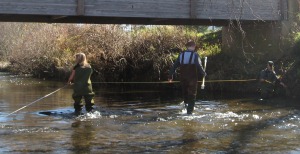
Hydrology and Environmental Geology Research Group:
What do fossils tell us?
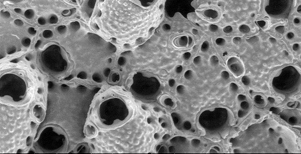
Paleontology Research Group:
What do landforms tell us? How do humans influence landscapes?
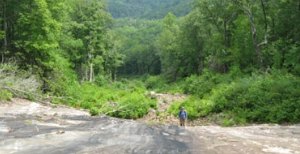
Surface Processes Research Group
What do the minerals in rocks tell us? What is the role they play in the environment?
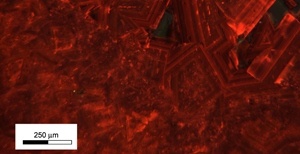
Mineralogy, Petrology, and Geochemistry Research Group:
How is Earth's climate recorded in minerals, rocks, sediment, water, and ice? How has climate changed through time?
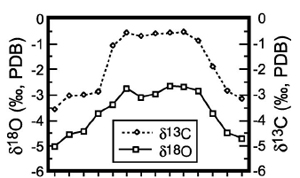
Records of Climate Change Research Group:
What's so special about our department?
Ask A Geologist
You've got questions? We've got answers! Ask A Geologist!
Did you find something that puzzled you in your backyard or on top of a mountain? Have questions about local environmental problems? Want to know about what's going on in Boone Creek, the Watauga River, and the New River? Concerned about fracking in your region? Do you have a mineral that you can't identify? Think you found a meteorite? We will do our best to answer any geological/environmental question. We also have pages that answer some of our most frequently asked questions.
Latest News
SAFE Student Spotlight: Erika Hernandez '23
Feb 27, 2024
Hernandez received a Spring 2023 Student and Faculty Excellence (SAFE) grant to spread the word about the inaugural Watauga County BioBlitz. The goal ...
From App State to Asheboro, Geobago brings hands-on education to K–12 students across North Carolina
Sep 26, 2023
BOONE, N.C. — This fall, Appalachian State University has once again rolled out its Geobago recreational vehicle to bring hands-on science...
Environmental Science Program Director Robert Swarthout part of team that receives $531,902 NSF Grant
Sep 25, 2023
Environmental Sciences Program Director Bob Swarthout and professors from the Department of Physics and Astronomy have been awarded a three-year grant...
Drs. Robert Swarthout, Chris Thaxton and James Sherman Receive $531,902 NSF Grant
Sep 25, 2023
BOONE, N.C. — A group of faculty members from the Appalachian State University College of Arts and Sciences has been awarded a three-year grant from...
Dr Sarah Evans receives prestigious NSF CAREER award
Apr 3, 2023
Congratulations to Dr Sarah Evans, who recently won the prestigious NSF CAREER award, making her the third professor in App State's history to do...